Nov 23, 2009

Robert Samuelson – Blame It On The Seniors

This morning my son and I were discussing the prevalence of misleading economic data out there. Robert Samuelson is one of the few economists that I have respect for. Samuelson in his article, Health 'reform' that burdens our young presents yet another set of reasons why the Health Care Bill is bad legislation. He is correct, the lions’ share of Medicare is going to be sucked-up by the retiring hoards. But if you paid into the system for 40+ years wouldn’t you expect to get what you have paid for and have been promised?

He also has issue with the proposed rate structure that is part of the Health Bill for MANDATED coverage. Insurance pools work because they spread the costs of a few over a much larger group of people, most elderly are going to require more services but they have also been the ones that have paid into those pools for 30 years covering the higher rate of usage by their elders. If you accurately price coverage for each person’s age then people could never afford coverage and would end up either without coverage or on the government dole anyway. Having small risk pools that are tightly grouped by age only exacerbates the problem.

If the cost of health coverage increases as someone ages then employers would be much more reluctant to hire someone over forty strictly on the cost factor. One of the big problems with medical care is that those, even with good insurance, often find themselves with medical bills that exceed coverage and wipe out a lifetime of work and can be forced into bankruptcy after just a few months of illness.

His argument about AARP is good except that AARP by supporting the Health Care Bill is also supporting the $500 billion in cuts to Medicare. He criticizes their support for subsidizing premiums for the elderly but fails to recognize the fact that they have been paying that subsidy for most of their lives.

He also fails in his comparison of health insurance to auto insurance. Auto insurance is competitive, you can buy it from a local company or from a company in another state, you’re free to drop one coverage and pick up another. Auto insurance is not employment driven, when you change or lose your job you do not lose your auto insurance and if you have coverage for a health condition you may not be able to get covered for that condition ever again. Nor is auto insurance subsidized by the government, . A worker who pays into a health insurance pool making it possible for older workers to receive lower rates also expects a similar benefit when they reach their fifties.

The only solution to the health care problems plaguing the U.S. he presents is that seniors should pay premiums in accordance to their age. This is not an expectable solution and is much less than I expect from him.

Oct 2, 2009

Palin – The Anti Change Thing

In a Colgate Maroon-News article the authors made a strong argument that Sarah Palin lacked the intellectual depth to lead the country and if given the chance, would represent the GOP to a resounding defeat.

This is a true case of be careful what you wish for. The American people didn’t vote for Obama’s superior scholastic accomplishments or his homiletic discourse, they were just bored with a do nothing Bush and voted for a change in government. Now they are surprised to find out that it is government that wants to change them.

Palin took on the incredibly strong oil lobby in Alaska and then cleaned house throughout the upper levels of the Alaskan politically elite. This gave her the highest approval ratings of any Governor or Congressmen in the United States. Then why has she become the over-night archenemy of the intellectually advantaged, the villainess extraordinaire whose every word or deed is proof positive that she is unfit for anything but commonality.

Could it be that those who strive to be intellectually superior just will not accept that her overly simplistic and populace approach is the change that is needed. Some solutions require the elimination and not the addition of bureaucratic layers and the reclamation of constitutional fundamentals. After two hundred years of becoming the country that most want to emulate, we need to stop over-thinking this change thing.

Aug 19, 2009

Arlene Specter Does Not Want Your Health Care Comments

I tried to E-mail Senator Specter with my opinions on the health care debate and found out he does not want them. This seemed strange because he was out front with his Town Halls, but after viewing his website I have decided that the Town Halls were more of a politically inspired defensive move than an honest interest in what his constituents are thinking.

When you use the contact section of his website you’re asked to specify the subject that you are referring to. There are seventeen different categories and when you select Health you’re asked for a subcategory: Medicare, Medicaid, Abortion, Nutrition and so on. There are selections for just about everything like Gun Control, Card Check, Amtrak, FEMA, Food Safety, Climate Change, Endangered Species, Cemeteries, HIV, Asbestos, Hunger and even a category on The Sudan. But if you have a comment on the Health Care debate or on a new legislative initiative, he doesn’t seem to be interested.

I’ve only been in Pennsylvania for five years so I’m not sure what qualities Specter had to become the state’s longest serving Senator. From what I’ve seen, in these five years, whatever positive qualities that first endeared him to the voters in Pennsylvania, are now gone.

Aug 18, 2009

DIH – Democrats In Hiding, Why This Is Hurting Real Health Care Reform

THE PEOPLE DON’T TRUST THE GOVERNMENT AND ARE EVEN MORE SUSPICIOUS WHEN THEY ATTEMPT TO RAM THEIR PROGRAMS THROUGH WITHOUT DISCUSSION.

The dems’ claim that the resistance to Health Care Reform is being orchestrated by private interests and fringe groups is untrue. As someone who does not belong or support any group or party, I resent that our elected officials are erecting blinders to a majority of their constituents concerns. It doesn’t matter which side you’re on, both Democrats and Republicans have concerns with this Bill and their representatives stonewalling blocks both the reasonable and the unreasonable. This tactic just detracts from any real discussion of the issues in the Health Care Bill.

There have been numerous attempts to create a system for universal health care in the U.S. and all have failed because the overhaul was too large and unwieldy. People are willing to let the politicians play at politics but this Bill is too much of a change. All we’re getting is promises that it will be revenue neutral and our taxes won’t increase, that our level of care will not be managed by cost control committees and that over-all, life-is-good and things will not change. And you wonder why people aren’t falling in line behind the Bill?

This Bill creates preferential treatment to certain groups such as unions, mandates intrusion into families that use the system and penalizes those that don’t. There are a thousand pages of new bureaucracy’s, new rules and regulations that are open ended and tons of unintended consequences. Most of us agree that health care needs reforms but this is just too big and too expensive to pass with no real and open discussion.

I am against government run health care but favor serious and well thought out programs of reform, most of the average Joe’s and Jane’s out there would also support intelligent reform. Here are a few issues to start with.

· Tort Reform – Just look at John Edwards, the main beneficiaries of medical malpractice suits are the attorneys.
· State Regulation – Eliminate the system of state boundaries, they reduce competition and drive up costs.
· Insurance Mandates - All physicians should have to accept all legitimate forms of insurance eliminating insurance directed and managed medical care.
· Portability – COBRA is a joke, if someone loses their job they cannot afford $1,000 a month or more for health insurance.
· Pre-existing conditions – Too many people pay into a system for twenty/thirty years and if anything should happen to that job they can lose coverage for serious and expensive conditions.
· Generic Drugs and Drug Pools – Twenty years is too long of a window and drug pricing could be reduced if pooling were allowed.
· Medical Training – Offer serious subsidies for people to enter the medical field. Do not lower standards allowing less qualified people in, but make it possible for lower income people with sufficient aptitude to enter.

Any one of these would be a massive undertaking but trying to do them all and more is just too much.

May 16, 2009

The Honeymoon Is Over And I Want A Divorce - Obama’s Interest Rate Quagmire

He lives in Fairy Land and The White House has become His Magic Kingdom.

My last article talked about the quagmire that our economy will be in if Obama's uncontrolled deficit spending, in His attempt to reshape America, is not brought under control. Two days ago He made a speech where He stated the same thing. Bloomberg published this article: Obama Says U.S. Long-Term Debt Load ‘Unsustainable’.

Yes, higher interest rates would devastate the budget causing astronomical deficits – beyond the enormous ones already in the pipeline. But the problem is NOT HIGHER INTEREST RATES, it’s that He will not stop spending money He does not have. It’s the spending that is causing us to borrow in the first place. He will not give up his dreams to reshape the American economy. Here is another campaign speech (oops, Presidential Address) He made a couple of days ago. He recognizes the danger of increased borrowing but places His vision for health care, energy and the environment at a higher level of importance than mere monetary concerns.

The implication is that we will have to raise our level of commitment to society, lowering the level of our bank accounts.

If He will not stop deficit spending then the only way to reduce the governments’ need to float Treasury Notes is to find different ways of raising taxes. He loves hidden taxes; a dime on a coke or candy bar, a quarter on a gallon of gas, a buck a six-pack, 10% on anything plastic. He’ll nickel-dime-quarter us to death but will not raise our taxes.

His carbon tax could devastate the lower income portion of our society, severely curb the spending habits of the middle class and we already know what He plans for the upper class. His health plan would eventually dictate everything that impacts our health. People that are considered over-weight will have restrictions put on them because they are now a burden to the health care system. We will be told what foods we’re allowed to eat, what doctors we will see and our health care will be monitored for our own welfare. The majority of a person’s medical expenses come in the last few years of life, euthanasia would be the single biggest money saver.

He said today that people should pursue fulfilling careers such as volunteering their time or working for a non-profit. That the American People should aspire to higher level of commitment to the society. That leaves government work out, their all about the money. If He thinks He can dictate salaries in the private sector then the next logical step is to dictate salaries of Physicians, Nurses, procedures, medicines and hospital costs. All would benefit society. Doctors should aspire to a higher level and donate their time.

He lives in Fairy Land and The White House has become the Magic Kingdom.

May 8, 2009

The Recession Of 2011 Caused By A Credit Bubble?


Two years ago I showed a small article in the WSJ to a friend, the article was about two unknown hedge funds that were failing. My point was that this was just the tip-of-the-iceberg, the first signs of a much bigger problem; the unraveling of the credit market.

Since then, the government has tried to fix the collapse of the credit market by re-inflating it with government debt. Every week the Treasury sells $10’s of billions of “Treasury Notes” to fund that debt. Insurance Companies, Pension Funds, and Municipalities that are required to invest in ultra safe bonds buy about 45% of these and the remainder is purchased by foreigners that need to find a safe place to park their money that they get from selling their goods to the U.S..

Increasing the money supply, cash in circulation, stimulates the economy. The more money out there the more it flows around.

The Obama budget spends more than $25,000 per every single person in the U.S. than they are going to take in. That works out to a deficit of $42,500 for every working American. That is $42,500 above what we already pay in taxes.

In the short term this is working, but there are several things that are also working against this vast expansion of the U.S. debt and money supply. As the government prints money the value of that money decreases, that is why Obama went to Europe urging them to step up their stimulus. If they also print money then our dollar wouldn’t shrink as far or as fast. The dollar versus the Euro hit a 6 year high in March but has shrunk 7% since then. It is still strong but as you keep expanding the money supply its value only has one way to go.

A weaker dollar also means higher prices. The big disadvantage here is that foreign investors are not going to buy Treasuries if they get paid 2% on the bond and lose 7% to 10% on the dollar conversion when they trade it in. Why not just invest somewhere else where you don’t have the threat of losing money caused by a dropping value in the dollar.

As the government pushes more Treasuries out on the market, the market will push back by demanding higher interest rates. This phenomenon started yesterday with a 30-year sale pushing the rates up to 4.25%. Still very low but it was the first sign that the Obama administration is going to have to pay a premium for their borrowing needs in the future. Interest on government debt was four times what they paid for education last year, that represented 15% of the entire budget and that was at a historically low interest rate. It’s not unconceivable that as borrowing and interest rates increase, that the cost to the budget will take a much larger piece of the pie.

As the interest rates for Treasuries move up so do the rates for other debt such as home mortgages, business loans, auto loans, credit card and school loans are all going to have to raise their rates to compete. Money will become expensive and as this happens business slows down. Even as the economy starts to pull itself out of the doldrums the system is working to take it back down.

The indiscriminant printing of money is inflationary, so far the dollar has been barely hurt because other countries have also fired up their printing presses but have since put on the brakes. This allows other countries to enjoy a stronger currency while the dollar will keep falling. Economists say that you can’t have inflation without strong demand, but if you look around the world, many countries have had extreme inflation in a terrible economy because their currency was debased.

Again this will take a couple of years to play out but I am seriously concerned for my grand kids and yours.

Mar 31, 2009

Cavuto and Limbaugh Agree That Retirees Should Save The Auto Industry

In today’s shows both Neil Cavuto and Rush Limbaugh made articulate recitations on the need for retirees to take it on the chin to allow the auto companies the opportunity to get themselves out of their current predicament. There are some issues that I’d like to argue.

First would be Cavuto's reference to the steel industry. Unlike the current situation that the retirement funds of the auto workers are in, the steel workers retirement funds were massively overfunded. Wall Street came up with the scheme that would allow them to purchase these companies using the employee pension funds as their preferred funding source. After a few take-over’s any weakening in the economy was enough to tank them, forcing the fed to assume their pension responsibilities.

You can argue that it was the cheap Japanese imports that caused the steel industries failure, but the pension funds were fully funded prior to the long series take over’s that raided their pension funds.

Next would be the assumption that the retirees have to accept reduced benefits so that the companies can be saved. That may be the case today but if these companies were forced to adequately fund their commitments instead of filling the funds with promises; we would not be in this position today.

Today everyone is falling all-over themselves to save companies where managements have taken their companies to the brink of failure because of some past decision that were made to obtain some short term gain. At some point we have to make companies live up to the agreements made to their staff or it will be open season on retirees forever.

Obama's Plan On Autos - Take Over The Pension Funds

The unions AND the auto companies want Obama to land the big one; the retiree’s pension responsibilities. Neither one wants that on their plate.

I believe that Obama has a deal with the unions that trade major concessions by the auto unions in return for Card Check and government guarantees on the pension funds.

The one issue that is never discussed are the workers that have put in their forty years and are demonized for having a retirement plan that is inferior to the average politician. The unions knew that this would happen when they made the deal, and the autos were more than happy to squeeze their way out of negotiations with just a promise of future payment.

Feb 24, 2009

Cramer Nailed It - The Perfect Bank Bailout Plan
A Parody

Tonight on his CNBC show Mad Money, Cramer presented his own bailout plan that should take care of both the housing crisis and a weakened financial system.

The first step that Obama should do is to purchase preferred non-voting stock from banks that require additional cash to meet a conservative asset-to-liability ratio. These preferred would carry a low percentage of interest and would be repurchased by the bank and not converted to common. That would protect shareholders from having their investment diluted and the banks from Nationalization.

The second phase would be to offer current and new home owners a 40 year fixed-rate government backed mortgage at 4%. This would reduce mortgage payments sufficiently so that most people could afford their payment even if they currently have negative equity. This would give those home owners time to turn negative equity around, bring new life to the housing market and make home ownership available to a wider range of people.

Obama at first dismissed these ideas as just chatter from the Chattering Class. But no one can accuse Obama of not being sharp. We’ll let the banks issue newly printed preferred non-voting stock and in exchange they will get newly printed dollars. Both the newly printed dollars and the newly shares will have about the same value that would make it an even trade. Besides, when the time comes he’ll just change his mind, a politician’s prerogative, and convert those preferred and we’ll end up owning those banks for next to nothing.

The government backed mortgage program had him confused for only a moment, he soon realized that this program could achieve the pinnacle of his dreams. As long as these sponsored mortgages had an inflation clause, when the dollar tanks by the endless printing of greenbacks, almost all families in America would be living in government owned housing.

Consumer Confidence Records All-time Low
Obama Promises New Stimulus Will Finish the Pesky Index before the End of His First Term - A Parody

The New York-based Conference Board issued their monthly reading on consumer confidence at an all time low of 25, the lowest reading since the indexes start in 1967. January’s reading was an extremely low 37.4 and last February was a 76.4. The professionals that prognosticate such things saw a 35 in February and there were rumors that several of them were seen running through the halls of Congress cheering that finally there is something with a lower rating than Congress. The cheering soon ended when someone reminded the Representatives and Senators that only 12% (February’s Rasmussen Poll) of the American people think that Congress is doing a good job.

President Obama, when hearing the news, immediately called together his Cabinet of tax cheats, Lobbyists and a token Republican, rumored to be a senior Pennsylvania Senator, who together laid out a plan that will insure that the remaining 25 points left on the Index would be gone by the end of Obama’s first term. Obama wasn’t sure they could hit ZERO by the end of his first term but approved the measure anyway because he felt sure that it would work by the end of his second or third.

How Is Your 401/Retirement Plan Doing?
Because It Is Still The Largest Pool of $$ Left to Raid

The American dream is under attack; better paying jobs are being shipped overseas, our larger companies and universities are contracting out jobs to companies that import H-1B Visa holders that receive lower wages and fewer benefits, the cost of sending our children to university often requires taking out a second mortgage, a major illness can wipe out 40 years of work and saving and now our retirement funds are disappearing.

Craig M. Douglas and Tim McLaughlin penned an article about Boston’s mutual fund companies with major stakes in Citi Group. The largest holder of Citi stock, which have fallen 68% just this year, is Fidelity Investments which purchased an additional 100 million shares in the last quarter of 2008. As I read this article I thought of my previous employer that had their 401k through Fidelity and my son who also has his 401k with Fidelity. At the end of 2008 his fund had lost more than 50%.

It’s more than plausible that a majority of Americans have lost as much as 75% of their retirement. Already we have seen our steel workers retirement being taken over by the government. The auto workers who have worked 40 years building for their retirement are watching as Congress and the media demonizes them for bringing down the auto industry. Wasn’t this accomplished by an auto industry that made promises to workers then failed to provide the funding needed to fulfill those commitments?

The private sector isn’t the only part of our economy that is reeling from the obligations made to future retirees. Many communities offered lavish retirement programs to their leadership only to find themselves under a burden that they are no longer able to fund. Communities have a severe need to raise capital for human services, infrastructure repairs, police and fire services only to find that any increase in revenues are being eaten up by retirement liabilities.

Every week we pay 14% of our gross income to Social Security and Medicare; our esteemed politicians and economists have told us that both will be bankrupt in twenty years. That is if the Federal Government pays back what it has borrowed from it. There has been numerous papers written stating that the retirement age has to be moved up while benefits have to be cut if the Social Security Administration is to survive.

Even the last bastion of retirement security is being taken away from us. With property values dropping in most areas of the country, the equity that many had planned on using for their retirement has disappeared. The family home is the single largest retirement saving investment that Americans have used, that investment has also taken a 25% haircut.

All of this is happening while the government is the only part of the economy that is growing. The future demands for our tax dollars also has to grow which means that we will have less to work with. Even as our weekly checks will grow by a massive $13, the government seems to be on a consumption tax spree. Proposed increases in our taxes are in the pipeline for everything from a 50% increase in the fuel tax, a 150% increase in cigarette taxes, a massive carbine emissions tax will cause our electricity costs to increase (again), water and sewer fees will have to increase as new mandates come on line and the continuing need for school and education funding will affect our property tax.

The only answer I have is counter to the advice of our government; not to consume, not to spend and become even more conservative than I already am.

Jan 16, 2009

News Is Out – Circuit City Is DOA

It was just reported on CNBC that a proposed buy-out by the Golden Gate Group, that would salvage Circuit City as a going concern, fell through. The handful of liquidation companies that were standing by are coordinating their efforts that will result in about 35,000 being laid off. So far there is no announcement from the company, but I doubt that any useful information would be in it anyway. Good luck to a very large group of people that have stuck by while Circuit City tried to make the best of a bad situation.

Does Low Wages Equal Strong Management
Circuit City Is Now Hiring – Cheap

Dec 12, 2008

Bank Of America Sending 35,000 Packing, Bad News For Merrill Workers

In July Bank of America announced that they would be slashing CountryWide staff down to 7,500 from a high of 50,600 in 2007. That’s 85%. If past deeds is a prediction of future action then BofA will be shrinking Merrill significantly. Some layoffs have already occurred but my guess would be that three out of five Merrill employees will be pink-slipped out. That would account for the 35,000 announced cuts.

If you have any specifics please post them in our comment section.

From
Dealbreaker.com: “Bank of America is said to be planning on canning half of its New York equity trading desk in the next 2-4 weeks.”

Sony Closing Last TV Manufacturing Plant In U.S.

From NETWORKWORLD: “Sony has named its Westmoreland, Pennsylvania, plant as the second factory of a planned 5 or 6 that will be shut down as part of a global restructuring. The factory is Sony's last remaining TV manufacturing facility in the U.S. and the closure will see 560 people lose their jobs.”

The plant which manufactures 46” and 52” LCD TVs will stop production in February and the facility will be completely shuttered in March 2010 when Sony also closes their east-cost logistics operations. Sony will now manufacture these TVs in Baja, Mexico.

Westmoreland County web site post this in October: “The park, located in East Huntingdon and Hempfield Townships, further bolsters Westmoreland County’s major employment zone surrounding the Sony Technology Center.”

Here is an interesting comment on
MSN QnA Beta by toadhead: “There are no TV currently manufactured in the USA."

"The last one I new of were Phillips not a US company but they had a manufacturing plant in Missouri . As I understand it Wal-Mart said they would not sell there equipment, essentially unless they moved manufacturing to China so they would be cheaper and contain more lead, so they did. That was a few years ago all the other manufactures of TV have also moved over seas.”

Nov 28, 2008

Motorola The Falling Star


In the past I have had minimal dealings with the Motorola organization and each time their arrogance left me with a desire to find someone else to work with. I only grieve for the workers being jettisoned from this sinking ship.

From InternetNews.com: “Gartner's market analysis for mobile handset makers, released today, now rates Motorola (NYSE: MOT) in fourth place behind Nokia, Samsung and Sony Ericsson in global sales.”
Motorola Slips in Worldwide Sales

From the chicagotribune.com: “Motorola reported a net loss of $397 million, or 18 cents a share, in the third quarter, down from a net profit of $60 million, or 3 cents a share, in the same period last year.”
Motorola posts hefty 3Q loss, delays spinoff

From USA Today: ”The maker of communications gear said it would get rid of 3,000 jobs by April, with about 2,000 of them coming from the cellphone unit. The company last announced 2,600 job cuts in April.”
Motorola posts big loss, plans to cut 3,000 jobs

From cnet.com: “The iconic American technology company Motorola is in big trouble. But can a last ditch effort by a new top executive help the company pull one of the biggest comebacks in American business history?”
Motorola's struggle for survival

From BusinessWeek: “The company's falling star at AT&T, the largest U.S. mobile-phone carrier, underscores Motorola's persistent failure to release handsets that grab the attention of consumers and the service providers whose marketing is crucial to sales.”
Motorola's Market Share Mess

From rerwireless.com: “It will eliminate about 120 of the 600 positions in Motorola Labs, the unit responsible for basic research in everything from cellphones to radio technology,…”
Moto to cut jobs from R&D unit

More
thin gray line articles

Nov 27, 2008

Citi Is A Town Full Of Problems


Their exposure doesn't stop with sub-prime, with hundreds of billions in off-the-books liability, they still have hard times in front of them. Substantial problems in commercial paper, credit cards and autos are still to come, where do they go from here?

From an AP article on RGJ.com: “The government has decided that guaranteeing hundreds of billions of dollars in possible losses and injecting $20 billion more into Citi trumps the alternative: a panic that could leave retirement accounts and investment portfolios of millions of ordinary Americans in tatters and shove more people out of jobs.”
Analysis: Why Citi had to be rescued

View from the Radcliff India: “There's only one reason to agree to such terms, says Ellison: to stay alive."There are capitalists all over the place, but no one wanted to do the deal," he adds. "This is chemo. They need this capital to stay alive."”
If Citi's in such a mess, what about other banks?

From the WSJ online: “The Bush administration's rescue of
Citigroup Inc. is creating new confusion about the government strategy to shore up volatile markets.”
Uncertainty on Strategy in Citi Rescue

From the Arab News: “Citibank went into overseas markets long before its competitors and often secured an inside track by attending to the financial needs of government elites and leading local organizations.”
Editorial: Implications of Citibank bailout


From an AP article in the Columbus Dispatch: “Citigroup Inc. said yesterday that it will slash 53,000 more jobs in the coming months… Earlier this year, the New York-based financial giant trimmed 22,000 jobs.”
Citigroup shedding 53,000 positions

Citibank is cutting another 53,000 from its payroll, on top of the 22,000 job cuts it has already announced. This follows at least 17,000 last year.

Previous Citibank articles

Nov 7, 2008

The Insult Is Complete At LandAmerica


In August of 2007 I wrote an article, LandAmerica Leaves Much To Be Admired, little did I know that my LandAmerica article would have such a lasting quality. There may be only 11 comments but the consistency tells a condemning story of a company whose management can guide the ship during calm seas but are clueless as soon as the seas get rough.

It looks as if the final insult to the good people at LandAmerica will come from the $150 million in synergies Fidelity National will achieve
(from their Press Release) by this merger. To me it doesn’t look like a merger, it looks as if Fidelity is buying their accounts & agents and will be laying off the majority of LandAmerica’s staff that still remains after a year of endless layoffs.

As much as I dislike giving attorneys money, it would seem prudent for the LandAmerica employees to secure legal consul to ensure that they receive any and all compensation promised. At this point of the merger any legal action would have to be dealt with expeditiously. If anyone has retained consul, please post their consuls contact information on the comment section below so others may join as a group.

Good Luck and Best Wishes to all of LandAmerica’s staff.

Oct 9, 2008

Some Unexpected Good News For The Economy

One and a half years ago I criticized numerous economists for their rosy opinions of our economy. Life is great and there is nothing to worry about from here to eternity. There were hundreds of economists snubbing those of us posting our opinions that there were clear and distinctive warning signs that the leveraging taking place by the biggest and most successful investments banks, Freddie & Fannie and a handful of brokers, like Countrywide or New Century that wanted to act like an investment bank, were in serious trouble.

But last week Phil Izzo printed the results from a team of 56 economists that comprise the Wall Street Journal Economist Board. The board believes by a margin of 89% that we are headed into a recession of at least 2 quarters. That is negative GDP for 6 straight months; some believe that it will last longer.

That is the best news I’ve heard in a long time because this is the same board was wrong about the effects that the housing downturn. If they were wrong then it’s a good bet that they are wrong now. I’m going out and buying options for January.

Oct 5, 2008

What Is A Derivative

No one is asking the right questions.

Since the government has now committed to purchase $700,000,000,000 (I think I’ve gotten all the zeros right) in the toxic paper that the banks, domestic and foreign, are holding as assets on their books, I felt it was time to give my vast audience my view of what the government will be purchasing with our tax dollars.


Dictionary.com explains simply: a financial contract whose value derives from the value of underlying stocks, bonds, currencies, commodities, etc. Riskglossary.com defines derivative as: A derivative instrument (or simply derivative) is a financial instrument which derives its value from the value of some other financial instrument or variable.

OK, that tells us that a derivative is a contract-on-a-contract. But what is in these contracts that the average American will now own. Why have the banks cut the value in financial instruments to the point that causes them to go out of business?

Money was raised for home and commercial mortgages by issuing bonds. The banks that originated the mortgage would sell it to someone like Fannie, Freddie or one of the other commercial banks. They would bundle the mortgages and send them to the rating agencies. The rating agencies would rate the best of the bunch as AAA and the rest could be divided up into 15 lower ratings. Since many pension funds, insurance companies, financial institutions or investment groups require a AAA rating on the bonds they purchase, the lower rated bonds have to pay a premium interest rate to entice the sale of these bonds.


That’s where derivatives come in. Thanks to the Community Reinvestment Act of 1977 and its’ reworking in 1995, Congress allowed the banks to become more inventive with the way they sell and fund mortgages. The lower rated bonds are re-bundled with other contracts that could be anything from options and warrants (a contract allowing the purchase of stock at a future date at a specified price), or other types of debt obligations to other bonds themselves. This process snowed the rating agencies to re-rate 96% of the lower rated securities as AAA.

We don’t know what we’re buying. We don’t know what we’re paying for it. But we’re sure it is going to work and hey, we could even make something. This is from the people that voted multiple times against increased regulations to control Fannie and Freddie.

The point is that no one is asking the right questions. The banks and the rating agencies have records to show what is in each of these bundles, but I have not heard one banker or politician ask for that information. It’s time a little light is thrown on this stuff. How can we effectively regulate if we don’t know what we’re regulating. No more free passes.

Sep 29, 2008

Congress - Trust Lost

Michael Scherer in his article, A Failure Of Leadership and posted on Time's blog Swampland, expresses what most of us know but haven't put into words yet. At least by the media.

It seems that the American people would rather face economic ruin than put their trust in today's Congress.

Vote our incumbants out.

Sep 24, 2008

E-Verify Must Be Renewed


E-mail your congressmen, find it here, now and tell them that you will never vote for them again if they do not authorize the E-Verify Bill for another five years. Not the temporary six month extension they are trying to slip through Congress that will effectively put the issue off till after the election.

E-Verify works and is one of the few programs our government does that actually protects American Jobs. Please act now. Numbers can change things, make yours count.

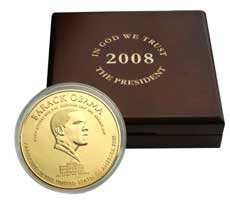
Democrats Preserve American Jobs With “President Obama’s” Coin


In keeping with their convention pledge to protect, promote and grow American jobs, the Democrats have contracted with Windsor, Elizabeth & Windsor, an UK company, to produce 300 limited edition commemorative silver coins for the Democratic Party to hand out to key members of the campaign to elect Obama.

By utilizing an English company to hand-craft these commemoratives, the Democrats are saving Americans the arduous task of producing these high quality keep-sakes. Since the average contribution to the Obama campaign is approximately $65, 2,300 hard working Americans have contributed to the Obama Campaign so that our Democratic Congressmen, Governors and party Dignitaries can have these valuable collectibles and admire there English craftsmanship.

After our Democratic Leadership has received these commemoratives, WEW plans to give the average American the opportunity to purchase the “Obama – The President” Commemoratives. These coins should gain considerably in value since this is the first time a Presidential Commemorative has been produced prior to the election.

This also gives the Republicans an opportunity to save the economy millions of barrels of oil by not having to drive to the polls to vote.


The picture of the commemorative being produced is from the Birmingham Post.net.

Jun 27, 2008

Dell Computer: Déjà vu 8,800 Last Year, 8,800 This Year

Last year I wrote an article: Dell Computers; Layoffs, Issues And More Layoffs. At that time I had no idea that I would be writing practically the same article this year. But Dell is like their service, consistently bad.

Dell has never given out straight forward information about their plans for staff reductions but rather they throw out a target number for the national business media and the small local layoffs get reported on in the smaller news markets around the country. The most accurate information has come from a NETWORKWORLD article by Dan Nystedt and reports that Dell has already completed 3,200 layoffs with another 5,200 happening soon.

Even though desktop computer sales improved by 10% last year, they will be closing their desk top facility in Austin, Texas and many that aren’t losing their jobs will be forced to take unpaid time off.

For more than a year Dell has been going through an audit that they claim was caused by certain departments fudging their numbers. As a result they will restate their earnings reports from 2002 through 2006 by a mere $150 million. That's a lot of fudge.

Dell is also being sued on two fronts, first for not performing on their extended warranties sold directly to customers and second for falsely advertising the terms being offered by their company owned financial arm. It has been reported that Dell’s financing division is now up for sale.

Dell, IBM, Intel, Cisco, HP and Microsoft have all gazed into the crystal ball and have seen their future in Asia and India. Doing business in the U.S. has just become too tenuous.

Jun 26, 2008

Gloucester Pregnancies – Bush Did IT!

Of course this depends on the meaning of “it”.

Earlier this week I watched the press conference held by Gloucester Mayor Carolyn Kirk concerning the high pregnancy rate at their high school. The story of a "pregnancy pact," by at least eight students, was reported on by Time Magazine who listed Principal Joseph Sullivan as their source. Since then Principal Sullivan has been mum and because of privacy concerns only several girls have come forward who claim no knowledge of a “pact.”

What amazed me about the press conference was that Mayor Kirk insinuated that sex education has been cut because of Bush’s No Child Left Behind Program. Yes, it was Bush’s fault that these girls got pregnant. Since the mandated program was under funded the school system had no choice but to cut other programs such as Sex Ed. The fact that Governor Patrick refused to accept a $700,000 funding package to help pay for abstinence training had nothing to do with it.

What would have happened if these girls took a virginity pact, for sure there would much less attention and publicity, I would also assume they wouldn’t become the Prom Queen. But then at least they would have a Prom without a baby strapped to their back.

What media ignore about teen pregnancy pact by Jill Stanek

Principal Sullivan has just issued a written public statement.

The Media Spotlight Catches Nielsen Outsourcing, Downgrading Full-Time Too Part-Time And Aggressively Abusing H-1B Visas

Theresa Blackwell penned a very good article in the St. Petersburg Times on the commitment by the powers at Nielsen to do everything possible to cut payroll. The controversy justifiably received national attention on the Lou Dobbs Show who emphasized the H-1B Visa abuse. Nielsen while putting Americans out of work is replacing the positions with H-1B Visa holders from India.

I’ve consistently written about H-1B Visa abuse and how companies, tech companies and our universities in particular, have shamelessly imported staff where there should have been more than a sufficient supply of qualified Americans to fill the positions. The only motive for the push to hire foreign staff would be to cap salary ranges.

From Ms. Blackwell’s article:

“Just four days ago, Nielsen gave up $3.1-million in future incentives for creating new jobs in Oldsmar, saying the controversy over the government money had become a distraction for employees and a source of conflict with the city.”

This would not be such a controversy or distraction if the Nielsen Company wasn’t absolutely committed to replacing U.S. workers with H-1B Visa holders.

One other point of contention that the article brings up but does not emphasize is the ratio of full time to part time employees at their Dunedin facility. With 4.4 part-time or temporary workers to every full-timer demonstrates that a desire to cut costs by cutting benefits.

Would this be the type of company you want to work for; maybe if you’re from India. You can browse the Nielsen Careers Page here.

Our Universities Have To Go Offshore To Find Talent
Companies Hiding Offshoring
LSI - More “Partnering” Lay Offs Coming To Kansas City?
Sun Micro's Jonathan Schwartz The Genius?
American Axle Moving More Jobs Out Of The U.S.
California Sending DMV Data To Mexico
Altria Optimizes Worldwide Cigarette Production
Dell Computers; Layoffs, Issues And More Layoffs
Freightliner The Long Haul From North Carolina To Mexico
IBM An Extreme View On Offshoring

Country of Origin COOL Will Finally Happen

According to the USDA website: “On May 13, 2002, the Farm Security and Rural Investment Act of 2002, more commonly known as the 2002 Farm Bill, became law.” This legislation was delayed twice and is now scheduled to be implemented September 8, this year.

The part that doesn’t make sense is that the fruit, meat and vegetables that we import are already identified, on the outside of there packaging, with the country of origin. It would be a small inconvenience to carry that information to the display. The only reasoning for not posting the Country of Origin with the product being sold would be that the retailer doesn’t want to handle the questions or comments that their customers might have.

But this is a huge step forward in the fight to keep jobs in America. Would Hershey be so aggressive in their closing of the Reading, Pa, plant if they knew that their Peppermint Patty Brand would have to be labeled “Hecho en Mexico”

Apr 29, 2008

Clinton’s Lack Of Fiscal Responsibility: Bush Forced Me To Do It

There is no recession at the Federal Pork Buffet. During the first seven years, Bush loaded up the federal buffet for all of Congress to wallow in. In FY 2008 there are 11,737 earmarks for a total of $16.9 billion of tax payers’ money allocated by congress for their individual pet projects. By requesting $2.3 billion in earmarks for FY2009, Mrs. Clinton has nearly tripled the largest amount received by any other single senator. Clinton’s office justified the requests by stating that the money is needed because of the Bush administration. So I take it that she is saying that her fiscal irresponsibility is because Bush forced her to do it.

Apr 3, 2008

Who Says Inflation Is Under Control

Consumer late payments at 16 year high. Could higher prices at the grocery check-out and at the fuel pump be putting the squeeze on our wallets?

Unemployment claims at there highest level in two years.

ATA Airlines shuts down stranding thousands and laying off 2,000. The cost of fuel was listed as one of the primary causes. Last week Aloha Airlines also shut-down operations.

Corn sets new record price of $6 per bushel. At least our all-knowing government officials tell us that inflation is under control.

Gasoline at new national record. Even with oil backing off there peaks, the cost of refined gasoline is starting its summer rise. Every spring refiners increase their crack spread (the mark-up on gasoline) to reflect the increase in demand. This process has just started.

Motorola disconnecting 2,600 more. Last year they had lay offs of 3,500 in January and 4,000 in May. During a cutting stretch in 2000 and 2001 their payroll shrank by more than 47,000 jobs.

Google planning to cut 25% in the Double-Click work force, in the U.S. that is.

Dell needs to find $3 billion more in cuts than the 8,800 they announced last year. From my article last July.

Merrill Lynch to lay off 4,000 to 7,000.

Schering-Plough will be cutting $1.5 billion a year in expenses, no estimate on how many jobs will be lost. Schering-Plough shares are down about 50 percent this year so heads have to roll.

Are you ready to pay for the poor Home Builders losses? Time to E-mail your congressmen.

NASA estimates as many as
7,300 will loose their jobs as the shuttle program ends in the next 2 ½ years.

La-Z-Boy is shipping jobs to Mexico, all of their cut and sew divisions will be relocated with no lay off estimates given.

Hamiliton Sundstrand will be completing its move to Singapore by lying off the last 65.

United Way officials in Dayton said record numbers of families are seeking emergency food assistance because of lay offs caused by the strike at Detroit-based American Axle & Manufacturing. My article: American Axle Moving More Jobs Out Of The U.S.

CBS Moves Ahead With Layoffs in News

1,500 Possible Layoffs at Freightliner Cleveland Plant. My previous article: Freightliner The Long Haul From North Carolina To Mexico

From the
CoStar web site that monitors the Fed’s watch list:

The Federal Reserve Banks moved up the planned closing of several of its check processing facilities, most of the cuts will come from permanent result work reductions.

Newsweek announced that 111 staffers on its news and business sides in New York City accepted a buyout last week.

Chromcraft Revington Inc. is progressively shifting manufacturing of products from its Delphi, IN, plant at 1100 N. Washington St. to suppliers primarily in Asia. Manufacturing activities at the Delphi facility will conclude on May 30. The reduction in force is expected to impact approximately 150 Associates at the Delphi location. Within the past 18 months, the company has closed and sold its plants in Sumter, SC, and Warrenton, NC, as well as its warehouse and distribution center in Knoxville, TN. The company also relocated its upholstery operations into its existing facilities in Lincolnton, NC, and sold its upholstery plant.


EMI Christian Music Group confirms layoffs of between 1,500 to 2,000 staffers by this June.

Long-expected layoffs begin at W.Va. steel mill, from a peak of 13,000 to 1,000 after these latest cuts. Steel mills have been devastated throughout the northeast by Asian steel and like most of the problems facing America; all the politicians do is use this issue as political fodder.

Earlier this week, Wheeling-Pitt's parent, Esmark Inc.,
announced it would shut down a mill in Allenport, Pa., and idle parts of the operation in Martins Ferry, Ohio. Those cuts could cost as many as 360 jobs.

Analysts see 200,000 banking industry layoffs in the next 18 months.

Whirlpool, a great old Mexican brand.
350 Cleveland jobs go to Mexico. Behr Climate Systems plans layoffs, plant closure. From the Germany based Behr Groups web site: “Today we are active in all major markets in Asia and take advantage of the opportunities they offer.”

Mar 17, 2008

Bear Stearns And The Fed

The question is can the Fed keep these banks afloat till after the election.

Last week BS was forced to close two of their funds that were leveraged 32 : 1. The current trend was to issue very short-term low-interest notes to pay for their higher interest debt that they had purchased, allowing them too subsequently book the difference in the interest rates as profit. When the market for these short-term notes dried up they lost their ability to redeem the ones that were coming due, creating a devastating margin call. This was the game that most of the investment banks were using to build their bottom lines over the last five years.

The next headache happens when the Fed is forced to react to inflation and raise interest rates to the point where these guys can no longer cover the cost of the longer term debt, which they are holding, with lower-rate short term money. Each time the Fed cuts rates, the game keeps going. It has only been a little over two years when the Fed started raising rates and the “biggies” started having troubles, this will happen again and again as long as the Fed feeds the cycle and prevents the unwinding of these debt instruments.

Mar 4, 2008

JCPenney’s American Living The Ultimate American Sham


JCPenny is flooding the airwaves and other marketing medium with their new line called “AmericanLiving”. The new brand is being manufactured by Polo Ralph Lauren Corp and will be Penny’s feature line for all clothing groups; men’s, woman’s, kid’s, young adult’s and home furnishings. The brand will carry a 15% higher price point than their other lines.

The label itself shows incredible contempt for the American worker by having the bald eagle toting an American Flag then proudly claiming “US Quality Brand”. JCPenny has even used this emblem on the front of shirts, sweaters and even on shoes. In doing so they are exploiting the nationalistic pride we have in America to sell foreign made products. If they would have used American manufacturers I would whole heartedly support the line.

We visited a JCPenny’s store yesterday and when checking the lables we found the following: “Made in Jordan”, “Made in China”, “Made in Vietnam”, “Made in Taiwan”, “Made in Philippines”, “Made in Honduras”, “Made in Macau”.

The closest we get to the US was “Made in Northern Mariana Islands (US)”
View their commercials. DO NOT BUY From JCPenny and be sure to tell them that you will boycott their stores until they start selling American Pride by selling American products.

The Great Exploitation Of The American Worker


JCPenny is using Americana to sell their new line called “AmericanLiving”. With pictures of kids on tractors, seniors enjoying the American way of life, families on vacation, marching bands and young ballerinas they are shamelessly trying to use the pride we have in America to sell foreign products.

Just view their commercials and then try to find a label that says “Made in America”. Boycott JCPenny and let them know what you think. E-Mail link.

Hillary's News


From A LA Times Blog TOP OF THE TICKET Hillary’s held a rally in Texas that had “seating” room only. Clinton spokesperson said: "These accommodations should in no way be taken as a comment on the quality of our media coverage." (But if you’re not careful next time it will be the Ladies Room)

Sharper Image Gift Cards - The New Collectors Item


My intent was to lambast the mean corporations that cheated their customers out of a few bucks by refusing to redeem the gift cards they had sold them and turning them into collector items. As it turns out a gift card is “loan” to the company to be repaid in merchandise at a future date. So if you have a gift card the company is not allowed to “repay” your loan until the court decides who gets what. But then I have never heard of a bankruptcy proceeding where the customers who were cheated were also represented.

We need a change in the bankruptcy law that puts employees and customers before other financial creditors.

As it turns out the
Sharper Image story is interesting. Wikipedia takes a good look at the company along with some links to background stories. The building of this brand started in 1977 and their growth was based on adult gadgetry, soon after the Ionic Breeze hit the store shelves it dominated their product line. That same product turned out to contaminate the environment with the very agent that it was designed to remove; ozone. Law suits ensued and the Ionic Breeze was discontinued. With the loss of their numeral uno product to drive traffic to their stores a steady decline in customer counts and sales was initiated.

Journalists familiar with the company have estimated that they will shutter about halve of their stores. But at the time of the bankruptcy they only had $700,000 in cash, without significant additional funding they just don’t have the bucks to close only halve. They will be forced to do an over-night skedaddle leaving customers, employees and vendors on the hook.

Feb 19, 2008

There is no Housing Crisis

There is no real estate crisis. There is a wash-out of speculators in the areas where prices were driven by that speculation along with a serious lack of interest for property in the great shrinking rust-belt. Quality loans at extremely low rates are readily available to “A” borrowers.

What it should be called is the “bad exotic vehicle bubble”. The investment banks made a ton by repackaging high-risk/high-interest mortgages into a more complicated structured investment vehicles like CDO’s and SIV’s. When a mortgage becomes part of one of these, the normally straight forward mortgage accounting rules get fuzzed-up, allowing the bank to book a greater portion of the anticipated interest as an asset. This became the trough that the fattest of the hogs ate.

The write-downs that are dominating the financial media space are just a reversal of the “profits” that these investments banks have already booked that would of never happened if normal accounting rules had applied in the first place. The 25 top players in this game lost more than $100 billion in 2007 and that number could be doubled if you add in the next 100 or so regional banks, retirement funds and investment trusts that bought into the higher rates that the CDO’s and the SIV’s offered.

As the default rate for exotic mortgages started to increase and the market for these securities dried up, the speculators lost their biggest tool that allowed them to acquire their properties. When the speculators were stymied, housing prices flattened out and in the most active areas, declined. This gave the creators of these investment vehicles, having New York as their play ground, an opportunity to blame their potential negative exposure on a housing crisis.

Our largest investment banks enticed the financial media by leaking the assumption that they had billions in exposure, all because of unscrupulous and corrupt mortgage brokers. The fact that none of these brokers would exist if it weren’t for the eagerness of the investment banks to purchase these loans, with very lucrative commissions attached, from the very brokers they now blamed. With sub-prime, alt-a and jumbo mortgages becoming prohibitively expensive, the housing market produced a constant supply of bad news that eventually sucked in even Congress. As expected they produced a landmark deal with the Treasury that accomplishes nothing, a months grace after three months of non activity is just the solution that will definitively save the market.

The financial media was also instrumental in determining the Feds current disposition. By presenting one economist, guru, potentate and mogul after another calling for rate cuts, they created a public ground swell that anything but substantial cuts would have demonstrated that the Fed was out of touch with the real world. This frenzy to inject liquidation into the economy has little to do with the housing crisis and all to do with the fact that Wall Street loves cheap money. These same investment banks are now able to book enormous profits because their cost of capital has come down so low.

When thecost of money comes down and liquidity is added to our system, the banks have money to put to work and credit standards loosen. The resulting effect of “easy credit” is always an upturn in the default rate and the banks respond by tightening those same standards. Our economy has always had swings from loose credit to tight credit and back again, the difference here is we are just entering a period where credit is starting to tighten and the Fed is literally dumping liquidity on top of a tightening market. At this point it just doesn’t matter how much money is available, if someone doesn’t qualify they will not get the loan.

The credit crunch is definitely spreading; lenders are tightening standards on all types of loans and investors have lost their appetite for “exotic” instruments that can’t be accurately valued. This is just a normal swing that happens after an abuse. The fact that “UBS AG and Credit Suisse Group last week announced the write-down of a combined $400 million” should not come as a surprise. In this atmosphere where write-downs are expected there will never be a better time to clean-up your books. They could even be tilting the books to favor future profits; this is not an unknown concept to investment banks.

As far as these write-downs being a forward looking indicator of the future doom that our corporations will experience, is quite a stretch. Our economic slow-down will have it’s casualties but for the most part our corporations are sitting on enormous cash positions, the street anticipates them to start spending these cash hoards providing the impetuses for another growth cycle in our economy.

Nov 27, 2007

CitiGroup Puts Our Oil Money To Work

Yesterday CitiGroup announced the Abu Dhabi Investment Authority will invest $7.5 billion in our nation's largest bank. The investment was made through the purchase of convertible bonds that pay 11% and will convert to common shares, at a maximum price of $37.42, anytime during the fourth year of the note.

Citi must need that money fast because under the above terms an 11% convertible (2% over junk bonds) would have been grabbed up by US investors. Then again there is the possibility of doing significant business with the sovereign investment trust in the future. With Citi pointing the way, many more opportunities should open up for the group.

Still, if CitiGroup’s stock regains half of its value, then these convertibles are extremely valuable and I would rather see Americans rewarded for their years of investment into CitiGroup.
If the company announces layoffs of in the 40,000 neighborhood, then their stock should take a good jump on the strong cost cutting news. There is also a consensus that CitiGroup would release significant value to shareholders if the company were broken up.


Joseph Altman, AP Business Writer wrote an interesting article: Citi Sells Stake to Abu Dhabi Fund

Nov 26, 2007

Pimco Financial And Bill Gross

Part of a series The Great American Write-Down

Pimco Financial: Bill Gross is the chief investment officer for Pimco, the world’s largest bond fund. When interviewed on CNBC he said: "A Fed cannot afford to let homes go down by 10 to 15 percent like we saw in Japan," Mr. Gross saw the turmoil our markets are experiencing more than a year ago and steered his fund away from the troubled sectors. The result is that Morningstar has listed his fund in the top 2 percent of all bond funds.

From a Brett Arends
article on theStreet.com:

“Last week, Gross grabbed the headlines by warning that the housing slump could lead to devastating economic consequences. He argued that a 10% fall in prices nationwide could set off price deflation of a kind not seen since the Great Depression, while waves of mortgage defaults could undermine confidence in the financial system here and abroad.”

Mr. Gross sees the problem as being much worse than reported and is calling for immediate federal action to directly aid troubled home owners.

Jim Jubak describes the environment the bond market is in these days in his article, The Bond Market's Shaky Foundation on theStreet.com:

“The unstable foundation is built on overseas cash flows and currency manipulation by foreign central banks. Dry rot threatens the whole system of ratings. And some of the banks propping up the market for credit derivatives shake at the slightest touch.”


“The professionals in this market -- the traders, the underwriters and the more sophisticated investment banks -- know exactly how shaky the whole edifice has become. They're determined not to be the last out the door.”


Articles:
Housing bubble bust helps Pimco's Gross rebound
UPDATE 2-PIMCO: Fed "can't afford" to let housing crack
FACTBOX-Writedowns and losses at major global banks

The Great American Write-Down

The business of mortgages.
In
The Mortgage Meltdown Part 1 I wrote “The widespread closures and layoffs in the mortgage industry is more than just a slow down or a shakeout, it directly points to a flawed business plan.” When you start doing No-Money-Down, Interest-Only, 100 Percent Financing, qualifying applicants on the lower “Teaser-Rates” and doing so on inflated home prices, leaves absolutely no room for error. The mortgage companies pile on significant fees and then sell those mortgages to various investment groups, many of which are listed below. Those banks sort and package those mortgages in order to either resell or issue bonds to recoup there expense. At each step the mortgage company or the bank takes their profit upfront adding to the cost of the mortgage. When the packages are funded they roll those funds into new mortgages and start all over.

It was too much money aggressively searching for deals, which ultimately drove the appreciation in housing.
There was so much pressure to produce mortgages that brokers were working every possible angle to get someone to take their money; bad credit was no problem, no money down and we’ll find a way, payment too large and we’ll up the price and get the seller to cover some of the interest, need some cash out of the deal our appraisers know the true value of the property and we love speculators because they’ll bring us lots of deals. Everyone was happy as long as they could take their profit and pass it on. There was so much stuffed on top of an already bad deal that any speed bump in the housing market could cause a crash.

Mortgages are available to qualified buyers with conservative appraisals.
Now that both the property and the financial speculator are washed out of the system, mortgages are still available to qualified buyers and at good terms. Fannie Mae and banks that didn’t handle subprime products are getting burned because of their investments into the bonds, CDO's and SIV's that were secured by these blotted mortgages.

What’s next?
Bob Janjuah, the head of credit research at RBS, Royal Bank of Scotland, has estimated that the total asset value lost by the subprime mess will end up between $250 billion and $500 billion. So far the total write-downs from the 23 American companies listed below is about $71 billion just in the past eight weeks.

Everyone but Mozilo of CountryWide agree that next year will be more of the same. These numbers are only from a handful of our largest financial corporations. As listed in my article, Mortgage Industry Producing Lots of Unemployed, hundreds of smaller companies have closed and approximately 40,000 have lost their jobs in the mortgage industry. Those costs have been enormous but don’t attract the headlines and aren’t included in the headline numbers. There are also losses like CapitalOne who had a negative $670 million turn around in the third quarter when compared to the third quarter last year. These losses are also missed in the tallies.

These huge losses also ignore some very large companies like New Century, First Magnus, American Home Finance and NovaStar. The mortgage insurance industry has been devastated; most of the companies in that sector are near death like Radian, MGIC, PMI, Balboa and First American. With losses mounting in these bond portfolios, bond insurers are facing losses beyond anyone’s imagination. The rating agency Fitch has said that bond insurers have a $2.5 TRILLION problem. Ambac, ACA Capital, Security Capital, Assured Guaranty and MBIA could be looking at hundreds of billions in losses.

If you have a pension account then you have probably lost money.
Accounts in most major pension and mutual funds have lost value. Even names you wouldn’t consider when talking about mortgages like Prudential, AIG, H & R Block and E-Trade are taking losses because of their involvement into mortgages backed securities. This spreads across all spectrum's of companies that held investments because the bonds were considered safe and paid a slightly higher dividend.

When you mention to someone that CitiBank will write-off another $10 bil this year, they look at you funny and say so what. It’s not CitiBank’s money that is being lost; it’s the money from investors and pension funds. At the low end of the above prediction the average American household will lose $2,244 in asset value (investment and pension) and that number doubles to $4,488 if we hit the higher estimate.

The problem doesn’t stop at our borders.
The following banks have all had major losses and write-downs because of their U.S. investments: Deutsche Bank –Germany $3.2 billion, Credit Suisse-Switzerland $1.9 billion, UBS-Switzerland $3.6 billion, Societe General SA-France $920 million, AMP-Australia $1.4 billion, RBS-Scotland $2.7 billion, Barclays-Great Britain $2,7 billion, HSBC Holdings-Great Britain $3.4 billion and in Canada the Bank of Montreal, National Bank of Canada, Royal Bank of Canada, Scotia Bank and CIBC all had losses due to their holdings of US mortgage securities.

Take a look at the following 23 profiles of the losses recently taken by our financial community. I’ve listed them separately so individual companies can be identified and additional resources are listed for each one.

There is one who called it right; Pimco Financial. Take a look, I’ve put him first. (Just above)

Bank of America

Part of a series The Great American Write-Down

Bank of America, (BAC) the nation’s second largest bank, said they will take a $3 billion write-down in the fourth quarter. When they announced that profits had dropped 32 percent for the third quarter they also had to include that they were going to let 3,000 staff go.
Every time a financial institution releases negative financials they feel that the next thing to say is that we are on top of things by letting people go. Of course 3,000 is a very safe number to throw out, with 198,000 employees, 3,000 can be done with little effort. What irks me is that Reuters out of London wrote that less than 100 of the cuts will come from Europe, Middle East or Africa, which leaves the good old US of A as the likely cutting field.

Articles:
UPDATE 2-Analysts cautious on Citigroup; BofA downgrades stock
BofA to take $3B write-down
Fewer than 100 BofA cuts planned for EMEA -sourcesFTC Clears $21 Billion Purchase: BofA deal could cost Chicago jobs

Bear Stearns

Part of a series The Great American Write-Down

Bear Stearns (BSC) wrote $820 million off in the third quarter and will take another writedown of $1.2 billion in the fourth. Moody’s and Fitch have stated that Bear Sterns still has too much exposure to subprime and CDOs.

Articles:
Ex Bear Stearns co-president Spector gets no severance
Bear Stearns sued over mortgage losses
UPDATE 2-Moody's warns on Bear Stearns, Fitch cuts

CapitalOne

Part of a series The Great American Write-Down

CapitalOne (COF) In June CapitalOne had a reported that they were writing off $300 million for the second quarter and stating that they are laying off 2,000. Now that they are reporting their results for an abysmal third quarter, they included another 1,900 to the chopping block. Since I couldn’t find a Press Release on their website I’ll assume that it’s an additional 1,900 and not part of the original 2,000.
I did find one item of interest in their Press Released was one titled Capital One Makes Pigs Fly!
For the third quarter CapitalOne had an $81.6 million loss as compared to a $587 million profit in the third quarter of 2006. That loss was made more drastic by the fact that revenues had increased by a whopping 23 percent.

CitiGroup

Part of a series The Great American Write-Down

CitiGroup (C) wrote $2.2 billion off in the third quarter and estimates for the next two quarters are in the range from a low of $8 billion to a high of $21 billion.

CitiGroup just made an announcement that there would be a new round of cuts. The company has said that they have no numbers as of yet but estimates are that as many as 45,000 may lose their jobs. CitiGroup has 330,000 employees.

Maybe it’s just a coincidence, but I view the correlation between the companies that have aggressively off-shored, in the past three years, are also the companies that are experiencing the largest losses. I just believe that it’s a win-at-any-cost mentality.

Articles:
Citigroup Writedowns May Top $13.7 Billion
Citigroup debt protection costs hit new highs
Citigroup falls on "sell" after $15 bln writeoff seen
US STOCKS-Citigroup downgrade sinks Wall St
Citigroup Mixed Signals & None Good
Do You Work For Citigroup?

CountryWide

Part of a series The Great American Write-Down

CountryWide (CFC) In October CountryWide posted a $1.2 billion dollar loss, their first loss in 25 years. At the same time the company also put out a statement saying that the worst was behind them and predicted profits for the fourth quarter and 2008. The market bought into it and their stock jumped 32 percent.
From the beginning of the housing downturn Chairman and CEO Mozilo has viewed it as an economic correction; an opportunity to snatch up people and accounts from the hundreds of weaker mortgage firms closing up shop. They have been able to obtain much needed cash from Bank of America and George Soros.

E-Loans

Part of a series The Great American Write-Down

E-Loans is the mortgage division of E-Trade (ETFC) wrote $197 million off their books this month and made no forecasts for what is going to happen in the near future. The rumor mill has it that the problem may be significant enough to bring down the entire company. Only time will answer that one but their survival is not going to be painless.

Articles:
UPDATE 1-E*Trade CEO rules out bankruptcy-CNBC
Shares of E-Trade Fall on Plans for Mortgage-Related Writedowns in the Fourth Quarter

Fannie Mae

Part of a series The Great American Write-Down

Fannie Mae (FNM) had a $1.4 billion loss in the third quarter and they are scrambling; issuing bonds and floating addition shares to shore up their ailing finances.

Articles:
The Mess Won’t Stop At Fannie Mae
Freddie, Fannie to the housing rescue - not so fast
UPDATE 2-Fannie Mae, Freddie Mac debt protection costs rise
Big Ben's Dumb Idea for Fannie and FreddieFannie Mae Practices a Bit of Accounting Legerdemain

Nov 25, 2007

Freddie Mac

Part of a series The Great American Write-Down

Freddie Mac (FRE) reported a $2 billion loss in the third quarter, the TIMESONLINE.COM report that Freddie’s losses are $4.8 billion. From there Press Release Freddie lost $4.6 billion in the first three quarters of 2007. What isn’t getting press is that they lost $8.1 billion in net asset value in just the third quarter. Another quarter like that and they will be in non-compliance of the regulatory minimum capital requirement of $8.5 billion in excess capital. Just another $600 million and they will break the 30 percent mandatory target capital surplus directed by the Office of Federal Housing Enterprise Oversight (OFHEO. They are also in need of immediate funding putting their dividend at risk; both Freddie and Fannie are contemplating issuing convertibles or more stock, further diluting their shares value.

Articles:
Freddie Mac Reports Third Quarter 2007 Net Loss of $2.0 Billion or $3.29 Per Diluted...
Fannie, Freddie rout seen hurting major investorsUPDATE 1-Freddie Mac sued over mortgage problems

GE Asset Management

Part of a series The Great American Write-Down

GE Asset Management is the arm of GE that takes care of the $60 billion GE U.S. pension fund for 530,000 active employees, vested former employees and retirees and their beneficiaries. One of their funds, a short-term cash fund recently had a run and redemptions trimmed $600 million from the funds value. The management of the pension seems unconcerned but the part of all these write-downs that bothers me is that as these assets are disappearing, where exactly are they disappearing from. Me thinks that the losses will ultimately end up draining our massive pension accounts.

Articles:
GE: Investors took $600 million out of fund after subprime losses
Mortgage Woes Damage a GE Bond Fund

GMAC

Part of a series The Great American Write-Down

GMAC Last year Cerberus Capital bought a 51 percent stake in GMAC. Their mortgage lending unit, ResCap, lost $2.2 billion (25 percent) in value last quarter. GM was required by the sale covenants to capitalize ResCap with up to $1 billion if needed. They have done that but the company will still require additional funds to maintain a net worth level of $5.4 billion, also required in those sale covenants. Besides issuing $750 million in new bonds GMAC is considering purchasing a non-US mortgage company that will dilute the losses into a larger pool of mortgages.

Articles:
Now, What's Bad for GMAC Is Bad for the U.S.A.
GMAC Bids to Rescue ResCap
UPDATE 2-GMAC targets Northern Rock; sale of ResCap parts

Goldman Sacks

Part of a series The Great American Write-Down

Goldman Sacks (GS) wrote off $2.4 billion in the third quarter and no estimates have been made for the future.

The overall opinion is that Goldman is best positioned and have made the correct moves to weather this storm.

Huntington Bank

Part of a series The Great American Write-Down

Huntington Bank (HBAN) Huntington will have to cover about $300 million in the fourth quarter. Besides being hammered by the housing situation, Huntington let First Franklin Financial Corp borrow $1.5 billion that are secured by mortgages. Since Merrill Lynch now owns First Franklin I have to wonder how they plan to handle this.

Articles:
Huntington Bancshares Taking $300M Charge
Huntington sees surprise loss from mortgage client

IndyMac Bancorp

Part of a series The Great American Write-Down

IndyMac Bancorp (IMB). The third quarter was a rough one for IndyMac, posting a loss of $202 million or five times company estimates. Their credit rating is now BBB-minus, one more cut and they will have obtained junk status.

Articles:
IndyMac outlook now negative, was stable - S&P
IndyMac Bancorp posts 3rd-quarter loss
IndyMac loss dwarfs own forecast

JP Morgan

Part of a series The Great American Write-Down

JP Morgan (JPM) CreditSights Inc. has stated that JP Morgan might have to write-down as much as $4.1 billion. The company has been very silent about their own holdings while being quick to point to others.

Articles:
Moody's cuts 23 JP Morgan Alt-A RMBS classes
UPDATE 1-US mortgage-related losses up to $300 bln-OECD

Lehman Bros.

Part of a series The Great American Write-Down

Lehman Bros. (LEH) Lehman wrote $700 million off in the third quarter and have stated that any further write-downs should be neutralized by their hedges. It appears that they were quickest of the big nameplates to start shorting their mortgage exposure.

Articles:
Stock Market Update - Thu Nov 15 09:35:48 EST 2007

Merrill Lynch

Part of a series The Great American Write-Down

Merrill Lynch (MER) The $8.4 billion write-down Merrill took in the third quarter lead the company to a quarterly loss of $2.24 billion, the largest of their 93-year history. Estimates call for another $8 billion in the fourth quarter with a strong chance for more in 2008. To add insult-to-injury CEO Stan O’Neil, who led Merrill through four consecutive years of record profits as housing boomed, purchased subprime lender First Franklin Financial Corp from National City Corp for $1.4 billion. I guess O’Neil believed all the hype about the hype that subprime was contained and thought he would come out the other side as the somewhat of a genius.

Articles:
Merrill's own subprime warnings unheeded
Merrill bank $1 bln infusion keeps capital rating
Citigroup Falls After Analyst Downgrade

Morgan Stanley

Part of a series The Great American Write-Down

Morgan Stanley (MWD) wrote $6.2 billion off November 7th after writing off $1.2 in September. So far I haven’t seen any information or estimates for the forth quarter.

Articles:
S&P cuts 78 classes on 39 Morgan Stanley RMBS deals
New bank mark-to-model data is no measure of risk

National City Corp

Part of a series The Great American Write-Down

National City Corp (NCC) Third quarter profits fell 80 percent and their mortgage lending unit had a $152 million loss. Considering that they sold their subprime mortgage unit, First Franklin Financial Corp, to Merrill this past summer, the company kept a chuck of the subprime loans. In the second quarter alone, that portfolio lost $800 million in value. The ninth-largest U.S. bank also said it is eliminating 2,500 jobs or about 7 percent of their staff.

Articles:
UPDATE 3-National City net sinks 80 pct, cuts 2,500 jobs

NovaStar Financial Inc.

Part of a series The Great American Write-Down

NovaStar Financial Inc. (NFI) From a Jonathan Stempel article in Reuters: “NEW YORK, Nov 15 (Reuters) - NovaStar Financial Inc. shares fell as much as 63 percent on Thursday after the troubled subprime mortgage lender posted a $598 million third-quarter loss and said bankruptcy is possible.”


Mr. Stempel pens an interesting article about NovaStar and if you’re looking for a more in-depth look at the company, click here.

Sovereign Bancorp Inc.

Part of a series The Great American Write-Down

Sovereign Bancorp Inc. (SOV) The Philadelphia-based bank said it would triple its provision for credit losses by adding over $100 million to the reserve fund. Sovereign had gotten out of the sub-prime business in early 2006 and sold $3.3 billion of that portfolio, but retained loans they could not sell, many of them non-prime, which are usually given to home buyers with poor credit records.

Articles:
Sovereign Bancorp warns of writedowns

SunTrust Banks Inc.

Part of a series The Great American Write-Down

SunTrust Banks Inc. (STI) had $161 million of write-downs related to loans warehouse and trading assets.

SunTrust also included in their third quarter financials a $45 million severance charge related to plans to eliminate 2,400 jobs, or 7 percent of SunTrust's work force, by the end of 2008 to help the bank save $530 million a year by 2009.

Articles:
UPDATE 1-SunTrust 3rd-qtr profit falls 23 pct
SunTrust – Could Offshoring Be Part Of Their “Organizational Design Component”

Wachovia

Part of a series The Great American Write-Down

Wachovia (WB) wrote $1.3 billion off in October on their structured portfolio and $1.1 billion off in November on their CDO portfolio.

Articles:
UPDATE 1-Timing of Golden West deal 'not good'-Wachovia execWachovia Says Portfolio Lost $1.1 Billion in Value in October, Raises Loan Loss Provisions

Washington Mutual

Part of a series The Great American Write-Down

Washington Mutual (WM.N) will increase their loan loss provisions by at least $2.7 billion this year. The companies stock has also taken an additional hit from an investigation by NY AG Cuomo into the practice of pressuring their mortgage insurers to inflate the value of the properties being mortgaged. As a result of this practice, families were over mortgaging their homes causing a severe financial burden. As these loans were packaged and sold, there actual underlying value was also inflated; causing a misrepresentation and losses to the investment banks that bought them.


Note: Company just stated that further provisions, estimated at $1 billion or more, are going to be required to cover additional loan losses.


Articles:
WaMu Sinks as Losses Mount
Washington Mutual shares sink on Cuomo probe, losses
WaMu sued over home appraisals - law firm
WaMu’s “Amazing Accomplishment”

Sep 21, 2007

Reservists And The Job Dilemma

Kathy Robertson, in a Sacramento Business Journal article, wrote about three reservists from the Sacramento area. An interesting story but it fails to present a real and ongoing dilemma that reservists face when searching for a job. Employers don’t want to be put into the position of hiring someone who may be called away at anytime and sometimes for years. Add to that the severe penalties that an employer may face if they try to do what is best for the business and the answer seems simple; an unspoken policy against the hiring of active reservists.

Instead of threatening and punishing employers who step up and take the added responsibility of hiring reservists, we should reward these companies with a tax credit that kicks in when the reservist is reinstated. Lets say a 1/3rd tax credit equivalent to the reservists salary and applied to twice his time of missed work should be sufficient to make a reservist a valued commodity.

Previous articles about jobs and reservists:

Practical Career Training For Ex-Military
Patriot Express Ignored By MSM
Renewed Call For Reservists Legislation
Employers Snubbing Reservists

Sep 11, 2007

Sprint - The Computer Did It

As written about in Sprint – Boomers Under Attack Again, the $58 million settlement was finalized in Kansas City and the 1,706 plaintiffs will average $21,688 each. The 20 attorneys representing the plaintiffs will have to get by on only a mil each. Sprint also settled a $5.5 suit earlier this year in Atlanta.

From a
Kansas City Business Journal article, Sprint/Nextel blames the mess on a computerized evaluation program that singled these people out. It must have been the “computer” that moved older workers to departments that the “computer” decided to disband. It was also the “computer” that programmed itself to make it difficult for a higher paid and more senior worker to be as productive and their lower paid counterparts.

If Sprint would have gone about this in an open and honest way by offering the senior workers a fair compensation package, the only losers would have been those 20 attorneys.

Sep 10, 2007

Countrywide Shifting Gears But Still Aggressive

Jonathan Stempel in his July 16th Reuters article, stated that Countrywide Financial Corp CFC, has added jobs in every month for the first half of this year. While other banks and mortgage companies where closing or severely scaling back, Countrywide viewed the drying up of the subprime funding market as an opportunity to grab market share.

Through July, the Calabasas, California-based company said it ended July with 61,586 staffers, up from 59,011 in May and 54,655 at the beginning of the year. As competitors where closing Countrywide’s revenues continued to grow.

Stuart Plesser, an analyst at Standard & Poor's, said their increase in loan volume may not be all that it seems:

“Much of Countrywide's volume gains in June came from correspondent lending -- where the company buys loans from other lenders -- rather than from more profitable retail lending,...”

“June correspondent lending grew 43 percent to $21.88 billion. Retail lending fell 5 percent to $14.04 billion. The loan servicing portfolio grew 18 percent to $1.42 trillion.”

Just four weeks later Countrywide experienced a run on its banks. From the LA Times:
“At Countrywide Bank offices, in a scene rare since the U.S. savings-and-loan crisis ended in the early '90s, so many people showed up to take out some or all of their money that in some cases they had to leave their names.”
Countrywide immediately drew down their credit lines of 11.5 billion they had with 40 banks. This bought the company some time, but the real shot-in-the-arm came a week later when Bank of America invested $2 billion in convertibles. That gave B of A a 16% ownership stake and $145 million in annual income from the 7.25% interest convertibles.

With funding for nonconventional loans disappearing, Countrywide has said that they will emphasize their mortgage activities on the mundane “plain vanilla” mortgages that Freddie and Fannie can purchase. The change in emphasis from the companies aggressive pursuit of subprime lending to “plain vanilla” mortgages has caused Countrywide to lay offs of 500, 900 and now as many as 12,000.

On September 7 Countrywide put out a
Press Release and stated that they plan to fund their subprime loan activity internally. “Migration of the Company's residential lending business into its federally chartered thrift entity, Countrywide Bank, FSB, will continue.” With the portfolio of subprime loans showing abysmal results, the profits from these loans must be excessive.


From a
Gretchen Morgenson article for the The New York Times:

“Countrywide's entire operation, from its computer system to its incentive pay structure and financing arrangements, is intended to wring maximum profits out of the mortgage lending boom no matter what it costs borrowers, according to interviews with former employees and brokers who worked in different units of the company and internal documents they provided. One document, for instance, shows that until last September the computer system in the company's subprime unit excluded borrowers' cash reserves, which had the effect of steering them away from lower-cost loans to those that were more expensive to homeowners and more profitable to Countrywide.”

“Homeowners, meanwhile, drawn in by Countrywide sales scripts assuring ''the best loan possible,'' are behind on their mortgages in record numbers. As of June 30, almost one in four subprime loans that Countrywide services was delinquent, up from 15 percent in the same period last year, according to company filings. Almost 10 percent were delinquent by 90 days or more, compared with last year's rate of 5.35 percent.”

“Many of these loans had interest rates that recently reset from low teaser levels to double digits; others carry prohibitive prepayment penalties that have made refinancing impossibly expensive, even before this month's upheaval in the mortgage markets.”
'In terms of being unresponsive to what was happening, to sticking it out the longest, and continuing to justify the garbage they were selling, Countrywide was the worst lender,'' said Ira Rheingold, executive director of the National Association of Consumer Advocates. ''And anytime states tried to pass responsible lending laws, Countrywide was fighting it tooth and nail.'

“Mr. Mozilo has ridden this remarkable wave to immense riches, thanks to generous annual stock option grants. Rarely a buyer of Countrywide shares — he has not bought a share since 1987, according to Securities and Exchange Commission filings — he has been a huge seller in recent years. Since the company listed its shares on the New York Stock Exchange in 1984, he has reaped $406 million selling Countrywide stock.”

One very unhappy customer of Countrywide has a website, Countrywidehomeloansucks.com where hundreds of unhappy customers and ex-employees have told their stories. It does not paint an admirable picture of the company.

Aug 29, 2007

LandAmerica Leaves Much To Be Admired

From the company website and their Press Release:

"LandAmerica is recognized as number one in the mortgage services industry on Fortune's 2007 list of America's Most Admired Companies."

After a lay off of 700 FTE’s (full-time equivalents), that is what the company calls their employees, earlier this year they announced another round of 1,100 people being sent packing.

With the housing market working off the last five years of speculative excesses, it is understandable that they need to reduce staffing. What I find objectionable is that it is packaged with an additional stock repurchase program and in a way intentionally meant to support the company’s stock price.

In their Press Release they discuss the cuts after the stock repurchase announcement: “Also, as part of an effort to reduce costs…”. There is not the slightest bit of compassion or concern shown, nor will they even refer to the employees as people. They only mention severance because it is part of an expense.

From the company’s website:

"LandAmerica Shared Resources Center in Richmond, Virginia, supports over 900 company-owned offices and a network of more than 10,000 active agents. LandAmerica serves agent, residential, commercial, and lender customers throughout the United States, Mexico, Canada, the Caribbean, Latin America, Europe, and Asia."


New artical: The Insult Is Complete At LandAmerica

Barclay Ensures That EquiFirst Has Viable Future

In a Reuters interview with reprter Jonathan Stempel, company spokesperson Jennifer Sharpe, stated that the companies plan for lay offs “will help to ensure EquiFirst has a viable future”.
Also from the article: “EquiFirst, based in Charlotte, North Carolina, employed about 1,400 people before the latest cuts.”


Since the company is not in the talkative mood, SockPuppet posted this on the grapevine at Broker Universe almost two weeks ago on August 15, 2007:

“EquiFirst is getting ready to cut off the bottom 10-20% of its sales force. ELT (leadership team for those of you outside of building 5) may think this is a well guarded secret but everyone seems to know its coming. I've heard layoffs in ops are certain to follow.”

Adam Smith added to the tread:
“As someone who has gone through product cuts, then ops cuts, I can tell you the worse is yet to come (especially in service): double number of AE´s on an AM´s desk, 1 less person in file setup, 1 less person in broker setup, 1 less u/w etc. It will be painful, not as rosy as you picture it. Volume will be less, but it will feel like triple because there is no support. Plus, morale will drop because everyone will be worried about their jobs (I think you had ads that said you never had a layoff-now the security is gone) and u/w will kill more than approve loans because they to will be worried about keeping their jobs. Files you once got an exception will be a thing of the past."

“Also, if it has not happened by now, I would expect your products to start falling off the matrix weekly (I believe you guys sell alot to Citi and Citi just got hammered for all the subprime they have on their books).”“Lastly, if this is the first time layoffs have occurred, expect many more to follow. I know of many lenders that are on their 3rd round of cuts (AE´s and ops)”

“Anyway, good luck, and welcome to 2007.”

EarthLink Cutting Nearly Half It’s Staff

EarthLink, Inc. (NASDAQ: ELNK) is joining the herd of companies that announce lay offs and stock repurchases at the same time in an effort to support the companies stock price. While 900 people will be laid off, at least Mr. Huff showed respect for the people that were instrumental in building the company.

Rolla P. Huff, EarthLink President and CEO, announced in their Press Release:

“We are extremely appreciative of our employees’ dedication and contributions, and we hope that the benefits and services we have put in place to provide assistance will help during this time of transition,” stated Huff. “While we recognize this is a difficult time for those affected individuals, this was a needed action for the company to better align our cost structure with our existing business.”